
It kick-starts rally with the Africa Twin motorcycle; three more launches slated for the year

Even as India overtakes Japan in automotive sales in 2022, moving to third place for the first time, oddly enough the country's biggest motor show is going to see some big hitters give it a clear miss. Some prominent automotive brands have cited high event costs, negligible returns on investment, poor event management, and unfavourable location as reasons for their reluctance to participate. Major pure-play electric two-wheelers, too, are riding past this year's edition of the Auto Expo.
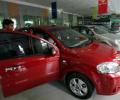
Data issued by Siam shows sale of PVs (cars, vans and utility vehicles) grew 14.3 per cent to 275,417 vehicles.
Automotive retail sales saw a 14 per cent rise in March on a year-on-year (YoY) basis, according to data released by the Federation of Automobile Dealers Associations (FADA). For the whole of financial year 2022-23 (FY23), sales grew 21 per cent YoY. For both March and the financial year, all categories, except for tractors, and including two-wheelers, three-wheelers, passenger vehicles (PVs), and commercial vehicles (CVs), posted double-digit growth. However, the total retail sales of 22.1 million for the financial year were still 12 per cent lower than the pre-Covid (FY20) level of 25 million, owing to an 18 per cent dip in the two-wheeler segment.
Market leader Maruti Suzuki India's passenger vehicles sales declined by 2.34 per cent last month at 133,702 units. Hero MotoCorp reported total two-wheeler sales of 480,196 units last month, down 20.05 per cent.
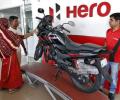
Hero MotoCorp, India's largest two-wheeler maker, has seen a decline in its market share in rural areas since 2018, losing ground to major competitors such as TVS Motor Company, Bajaj Auto, and Honda Motorcycle & Scooter India (HMSI), according to data from JATO Dynamics reviewed by Business Standard. Hero's share of rural two-wheeler sales in India has dropped from 40.4 per cent in 2018 to 33.3 per cent in 2023. In contrast, Bajaj's share increased from 12.7 per cent in 2018 to 13.9 per cent, HMSI's from 21.8 per cent to 22.2 per cent, and TVS' from 15.5 per cent to 17.8 per cent. Suzuki Motorcycle India has also seen its share rise from 1.7 per cent to 2.5 per cent.
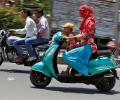
Dealers attribute the sluggishness in sales to distress in rural India as well as tepid sentiment in urban markets.

HMSI is likely to announce a tie-up with Snapdeal for online two-wheeler sales next month.

Proposed investment dip 33% from Rs 1.42 lakh crore (Rs 1.42 trillion) in 2011 to Rs 94,259 crore (Rs 942.59 billion) in 2013

Advertising industry watchdog ASCI upheld complaints against 82 campaigns in June for misleading ads, including those of Flipkart, Uber, Snapdeal, Vodafone.
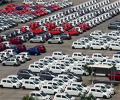
Passenger vehicle sales are expected to experience muted growth in the current financial year.


Maruti's sales of the compact segment comprising Swift, Estilo, Ritz, Dzire and Baleno went up by 9.9% to 45,579 units

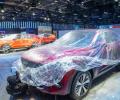
New electric and hybrid vehicles on display as manufacturers plug into environment-friendly segment.

Car makers are cautiously optimistic, even as two-wheeler firms are clearly upbeat.

Maruti Suzuki, Hyundai, Mahindra and Toyota reported low single-digit sales growth for the month owing to weak market sentiment
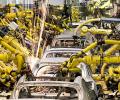
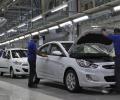
Indian automobile units are employing more and more robots to improve your car's efficiency. India is catching up well as world over, the latest technologies is redefining outdated manufacturing processes.

The All India Tennis Association, often accused of being lax in dealing with age fraud, had no clear answers to what transpired at CLTA.
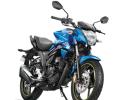
The 150cc bike segment in the country is witnessing commendable growth every passing day.
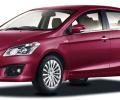
Ford India and Renault too reported good sales growth in April

They're sexy, powerful, irresistible and very, very expensive.
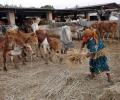
Normal monsoon makes FMCG, automobile and consumer durable companies optimistic about growth prospects
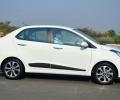
Buoyed by strong sales, Maruti Suzuki, Hyundai and Honda have scaled up their annual targets, but others are still stuck in low gear
